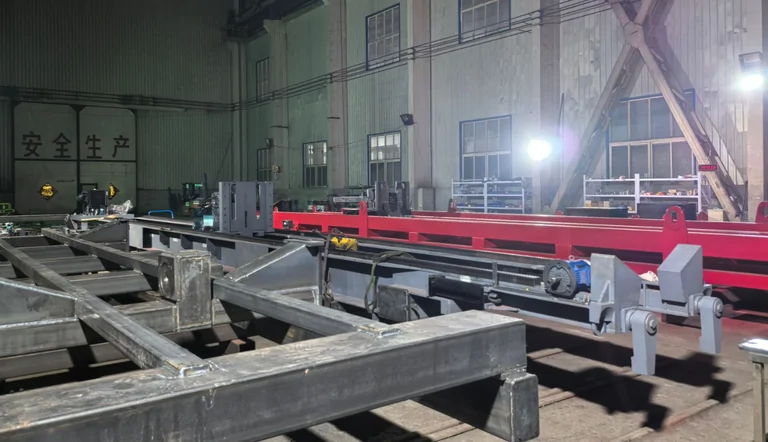
Selecting a bundle puller for heat exchanger maintenance involves more than matching a machine’s tonnage to the weight of a tube bundle. Two specifications must be checked separately: maximum pulling force and maximum bundle load capacity.
These ratings describe different functions. Pulling force indicates the equipment’s rated ability to overcome resistance during extraction. Bundle load capacity indicates the weight the equipment is rated to support under its specified operating conditions.
Understanding the difference helps maintenance teams compare bundle extractor specifications and choose equipment suited to the actual job.
What Does Maximum Pulling Force Mean?
Maximum pulling force is the rated axial force that a bundle puller can apply through its extraction mechanism.
During removal, a tube bundle may resist movement because of fouling, corrosion, interference or misalignment. The resistance encountered at the start of extraction can also differ from the resistance after the bundle begins moving.
For this reason, bundle weight alone does not determine the required pulling force. A relatively light bundle may still be difficult to release.
Pulling force may be expressed in kilonewtons (kN) or metric tonnes-force (tf). One metric tonne-force is approximately 9.81 kN. When a specification uses “T” for both force and weight, buyers should confirm the meaning of each column before comparing equipment.
The maximum pulling-force rating is an equipment limit, rather than a target force to apply on every job. If a bundle does not move as expected, the cause should be investigated within the approved operating procedure.
What Does Maximum Bundle Load Capacity Mean?
Maximum bundle load capacity describes the tube bundle weight that the extractor is rated to support in the specified configuration.
As a bundle leaves the heat exchanger shell, its support conditions change. The equipment must accommodate the bundle throughout the planned extraction and handling sequence.
Load capacity therefore needs to be considered together with:
- Bundle length and weight distribution.
- Bundle diameter and tubesheet dimensions.
- The position and arrangement of supports.
- The extractor’s approved frame and accessory configuration.
- The operating method specified for the supplied equipment.
A high pulling-force rating does not automatically establish an equally high bundle load capacity.
A Practical Example: 20 T Load Capacity and 15 T Pulling Force
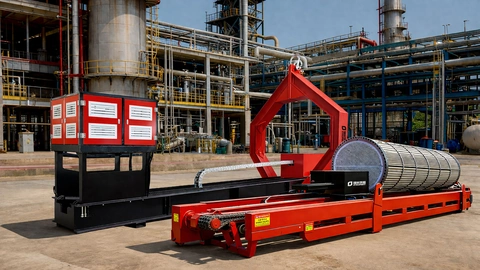
Jingchen’s published technical matrix lists the JCE100-6 electric tube bundle extractor with:
| Specification | Published reference value |
|---|---|
| Maximum bundle load | 20 T |
| Maximum pulling force | 15 T |
| Reference bundle length | 6,000 mm |
| Reference bundle diameter | 1,000 mm |
The two tonnage values serve different purposes. The 20 T load rating relates to supporting the bundle, while the 15 T pulling-force rating relates to overcoming extraction resistance.
These figures should not be exchanged or treated as a single “20-ton pulling capacity” specification. Meeting the weight limit also does not, by itself, confirm suitability for a particular heat exchanger.
Review the electric bundle extractor specifications to compare pulling force, bundle load, length and diameter across the listed configurations.
Why Length and Diameter Still Matter
Two tube bundles with the same weight may require different equipment configurations.
A longer bundle requires suitable usable equipment length and an appropriate support arrangement. Changes in support position affect how the load is distributed during extraction.
Diameter also needs careful checking. The nominal bundle diameter may not describe the full clearance required by the tubesheet, projections, attachment points or handling frame.
The available site space must accommodate the extractor and the planned movement of the bundle. Bundle length and machine overall length are different measurements; both should be reviewed during job planning.
For projects considering a diesel-powered system, the diesel bundle puller technical matrix provides reference specifications for comparing available configurations.
Does Diesel or Electric Drive Determine Capacity?
Drive type and rated capacity are separate selection questions.
A diesel-powered bundle extractor may suit locations where external electrical power is unavailable or difficult to access. An electric system requires a suitable electrical supply and consideration of cables and connections.
However, the drive type alone does not determine how much weight the equipment can support or how much pulling force it can deliver. Buyers should compare the ratings of the specific model and configuration.
Selecting the power source should therefore follow the site conditions, while selecting mechanical capacity should follow the bundle and extraction requirements.
Information to Confirm Before Requesting a Quote
To receive a useful equipment recommendation, provide more than the required tonnage. The following information helps define the application:
| Information | Why it matters |
|---|---|
| Bundle weight | Establishes the required load capacity; state whether the figure is a dry weight or includes retained material |
| Bundle length | Helps determine usable equipment length and support requirements |
| Bundle and tubesheet dimensions | Helps check physical compatibility and clearance |
| Previous extraction difficulties | Identifies known resistance or handling concerns |
| Exchanger position and available space | Helps assess access, alignment and the extraction path |
| Site power conditions | Supports the choice between diesel and electric drive |
| Required accessories | Allows the proposed configuration to be checked as a complete system |
Where available, include the heat exchanger drawing and photographs of the work area.
Preparing the Equipment for Service
Correct selection must be supported by equipment inspection and job planning.
Before deployment, verify the ratings and instructions for the actual supplied configuration. Hydraulic components, extraction attachments, supports and control functions should be checked in accordance with the manufacturer’s requirements.
If extraction resistance becomes abnormal, continuing to increase force can damage the equipment or heat exchanger components. The work team should stop and investigate the cause using the approved site procedure.
Jingchen’s bundle extractor maintenance support provides a further point of contact for equipment maintenance and project support requirements.
Match Both Ratings to the Application
A suitable bundle puller must meet the required pulling force and bundle load capacity, while also fitting the bundle dimensions and working environment.
When reviewing a quotation, check these specifications separately. Confirm the equipment configuration, clarify ambiguous units and assess the full extraction arrangement before making a selection.
Jingchen Petroleum Equipment offers diesel and electric tube bundle extractors. Share your bundle weight, length, diameter and site conditions with our team to discuss an appropriate configuration for your heat exchanger maintenance project.